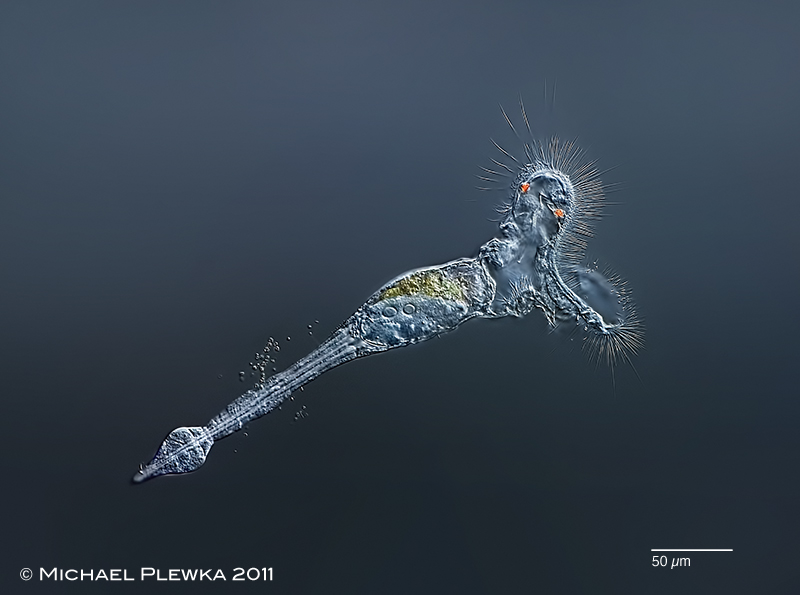
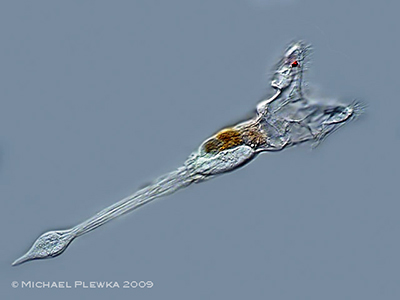
Collotheca mutabilis; this pelacic rotifer has two red eyespots on the dorsal lobe of the corona even in the adult stage (in contrast to other Collotheca species where the eyespots are reduced in the adult stage). C. mutabilis is one of the plankton species which swims backwards. (2)
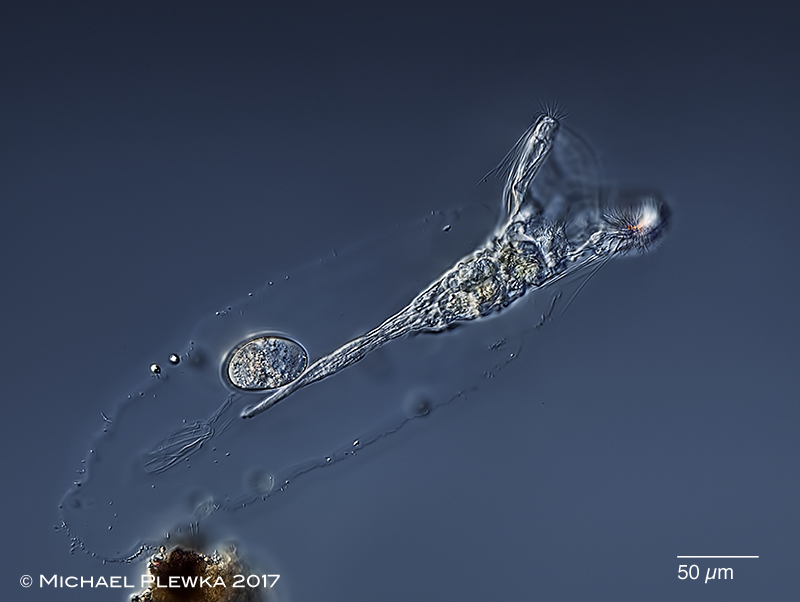
Collotheca mutabilis; specimen from (3) with a mucilaginous sheath, which is secreted by the integument.
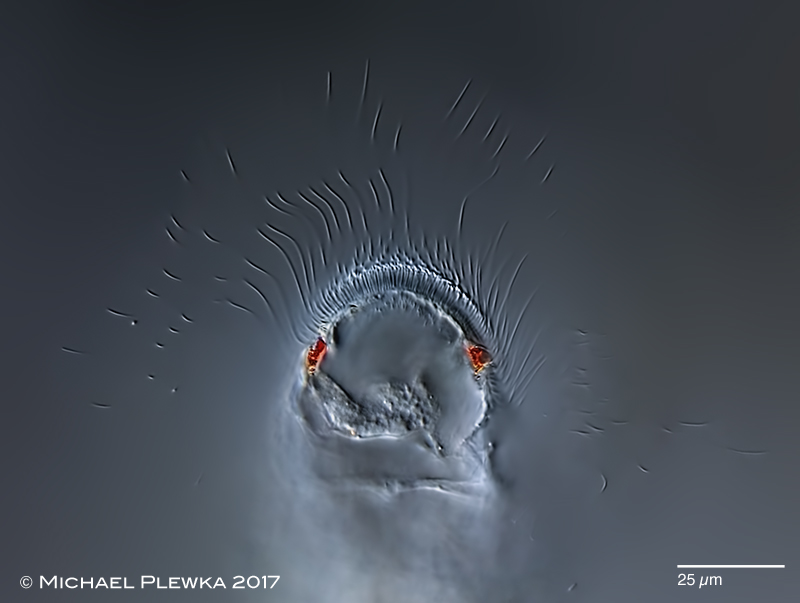
Collotheca mutabilis; same specimen as above. Optical longitudinal transect of the anterior region, lateral view, focus plane on one of the red eyespots. (3)
Collotheca mutabilis; same specimen as above. Focus plane on the dorsal lobe with two red eyespots. (3)
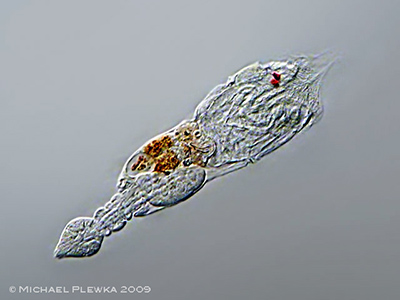
Collotheca mutabilis; specimens from (1). Left: sometimes the foot is thickened an the posterior end.
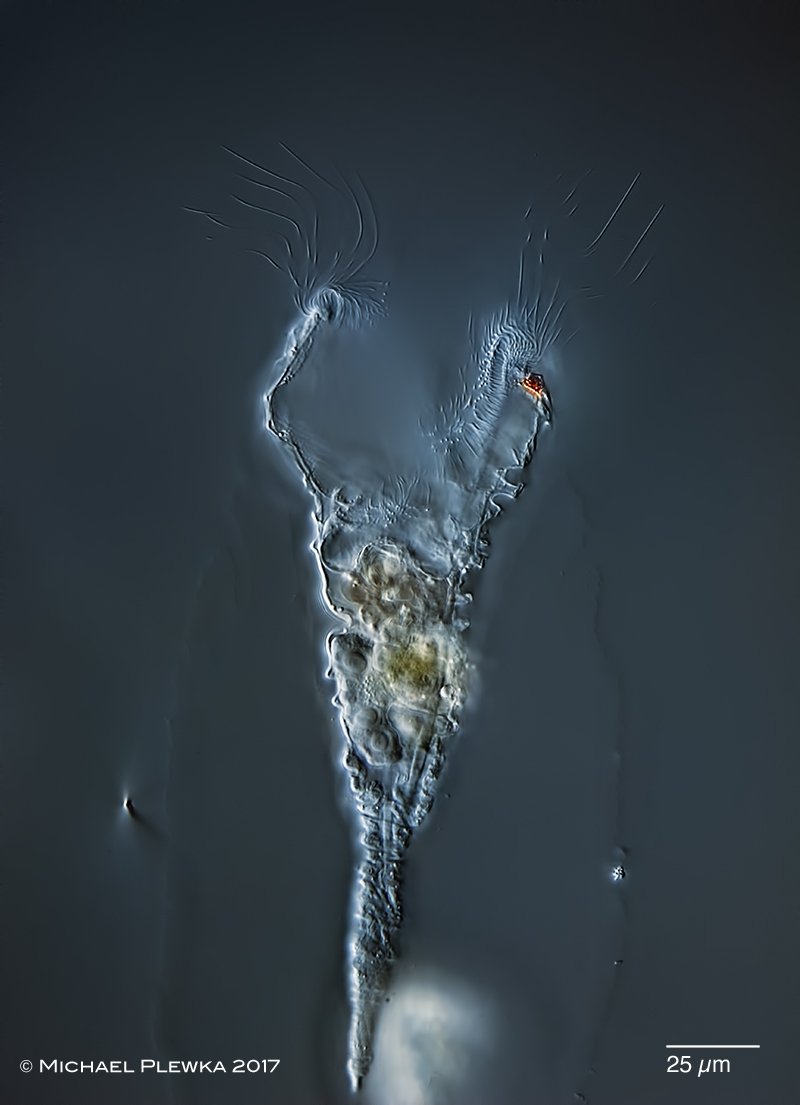
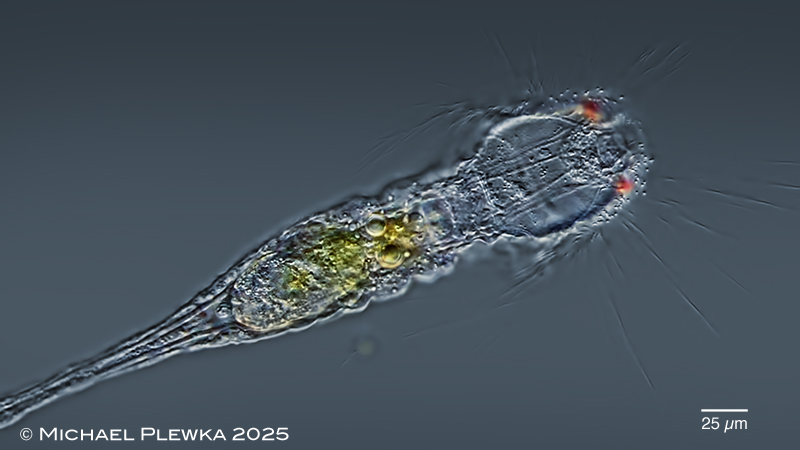
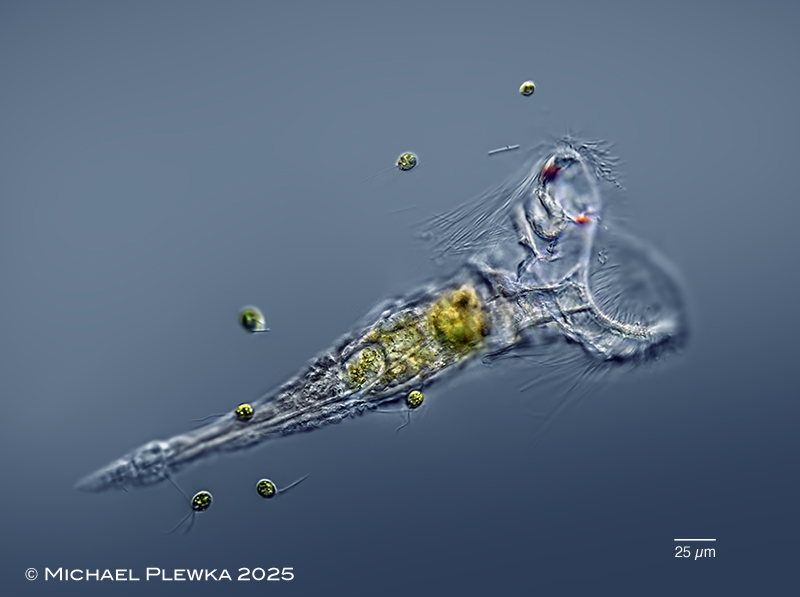
Collotheca mutabilis; two images of the same specimen in dorsoventral view.
Upper image: focal plane on the dorsal side of the coronal lobe with muscles and nerve cells.
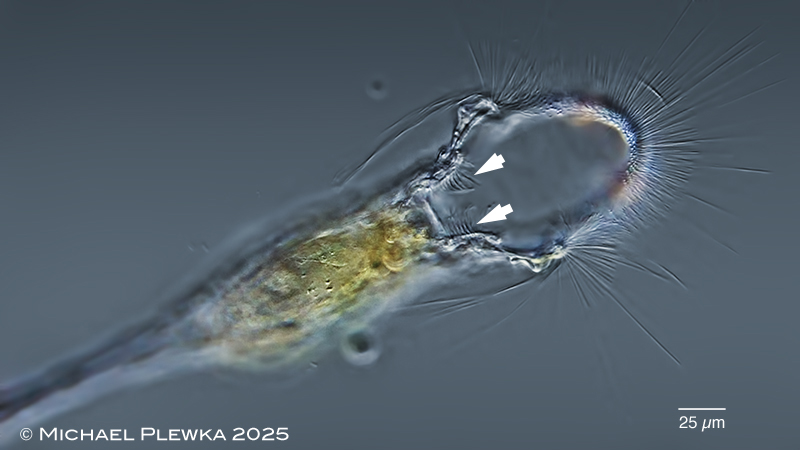
Lower image: median optical transect. The arrowheads point to a row of cilia (according to Donner (1956 a modified trochus) in the vestibulum which show metachronal movement. The lobes of the corona bear differnt cilia: many short ones and less long cilia. (4)
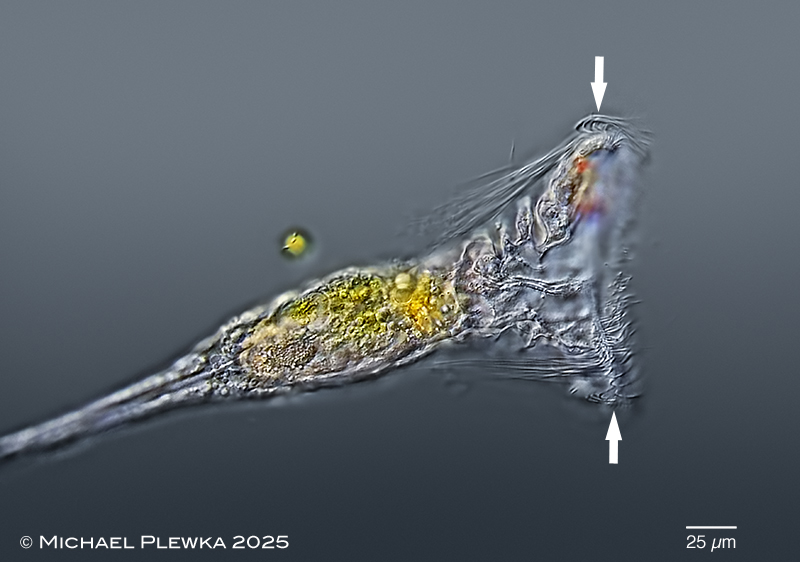
Collotheca mutabilis; the arrows point to some of the motile cilia of this specimen (in lateral view) in the phase of the recovery stroke so they are bowed backwards. This means their effective stroke is to the front. This results in backwards swimming, like in some Conochilus species. (4)
Collotheca mutabilis; while the short cilia of the coronal margin are in permanent forward movement, the long cilia are motionless. The presence of several green algae (with 4 flagella) (that are also diet of Collotheca) suggests that they might be attracted by chemicals from the rotifer that are distributed by these long cilia. (4)